
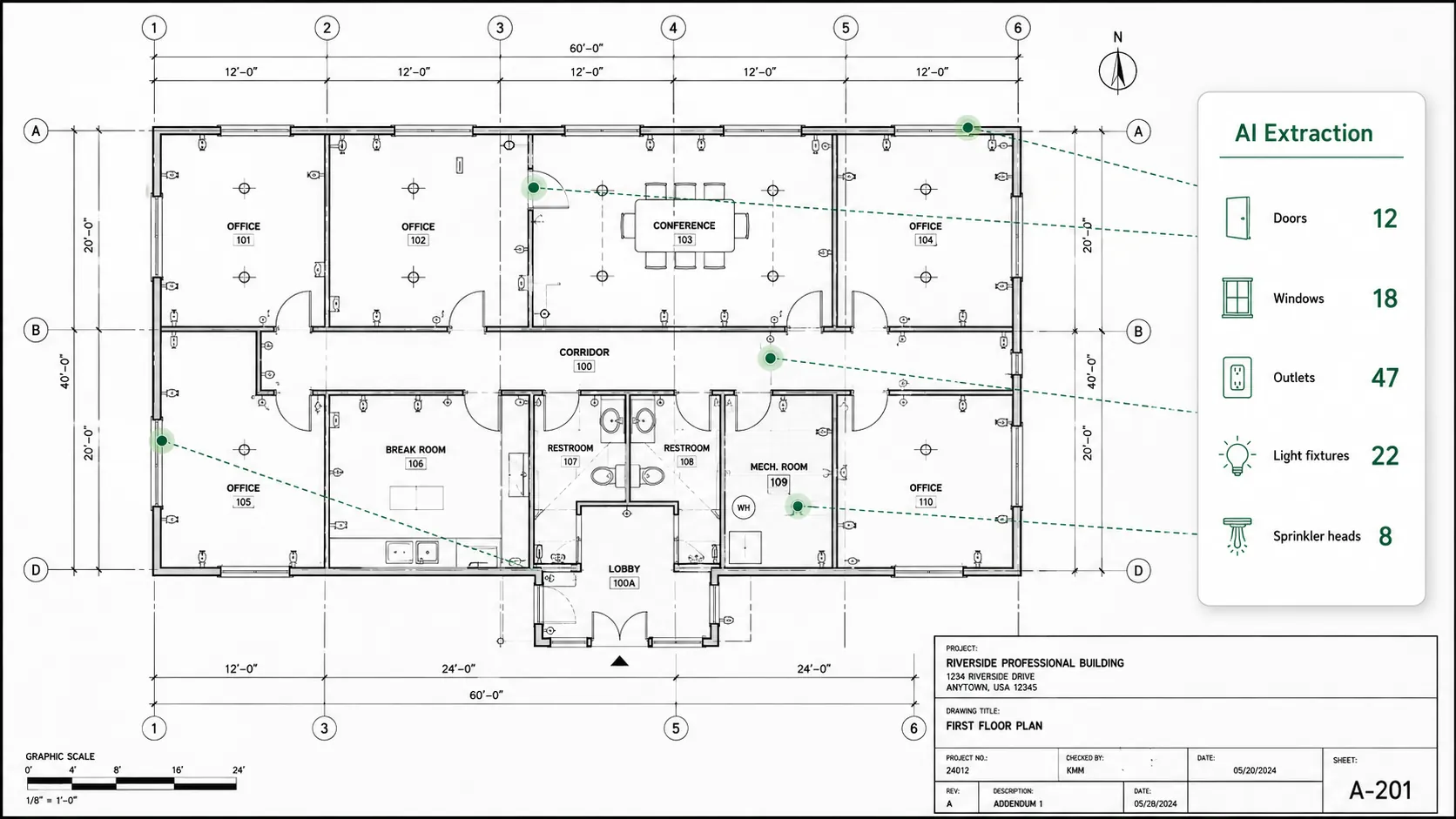
An AI agent can prepare a construction bid in monday.com by creating the file, classifying documents, extracting stated dates, checking a document list and drafting follow-ups. It should not set a price, interpret drawings alone or submit the final offer. The estimator retains quantities, exclusions, strategy and submission approval.
The strongest use case begins before price calculation: intake, filing, completeness checks, request distribution and response tracking. This preparation gives the estimator a cleaner file and a clear list of decisions to make.
Bids contain information whose source and version matter. A closing date in the email, another in an addendum and a third in the board creates immediate risk. The agent must cite the document it used, flag conflicts and request review whenever information can commit the company.
Work the agent can prepare
Open the bid file
From a form, forwarded email or new item, the agent creates the bid with owner, project, internal lead and any dates found. Fields without a source remain empty and appear in the checklist.
Classify received documents
The agent can distinguish an invitation, bid form, specification, drawing, addendum, insurance requirement, bond requirement or subcontractor list. Filing preserves the original file, its name and its link. An unknown category becomes a review request.
Check completeness
The checklist depends on project type and company. It may include signed forms, declarations, bonds, exclusions, price breakdown, requested schedule and site-visit proof. The agent marks each item present, missing or requiring confirmation. A similar-looking document does not automatically count as sufficient evidence.
Prepare requests for quotation
Using bid packages defined by the estimator, the agent drafts requests to suppliers and subcontractors, attaches authorized documents and proposes a return date. The estimator reviews recipients, shared scope and message before sending.
Track responses
The agent matches responses to the expected package and contact. It flags invitations without replies, attachments without a clear price and exclusions requiring review. It can draft a follow-up and record the result in the file.
Prepare the final check
Before submission, the agent creates a verification list: latest known deadline, received addenda, forms, key trade pricing, exclusions, approvals and submission owner. Final approval belongs to the estimator or authorized executive.
Decisions that remain with the estimator
A bid is more than a document assembly exercise. The agent lacks professional responsibility and complete commercial context for these decisions:
- selecting the construction method;
- interpreting ambiguity in drawings or specifications;
- confirming sensitive quantities;
- setting rates, contingencies and margins;
- accepting a supplier exclusion;
- deciding whether to bid or withdraw;
- signing a declaration or commitment;
- authorizing the price and final submission.
A useful rule requires the agent to cite the document and page when extracting a requirement. If it cannot produce that reference, it creates a question instead of completing the field.
The monday.com structure behind the agent
The file should explain bid status before AI is added. A practical model contains the following objects.
| Object | Essential data | Human owner |
|---|---|---|
| Bid | Project, owner, deadline, status, estimator, document link | Lead estimator |
| Package | Scope, invited supplier, return date, received price, exclusions | Package estimator |
| Document | Type, version, received date, source, required review | Coordinator |
| Requirement | Description, source, due date, state, evidence | Named owner |
| Approval | Decision, authorized person, date, comment | Executive or authorized estimator |
Relationships between these objects matter more than the number of columns. A supplier response must connect to the right package and document version. An addendum should show which requirements changed and who confirmed that it was included.
How to run the pilot
Choose one bid type
The pilot can cover private invitations for one project type or recurring requests handled by a specialty contractor. Combining public tenders, negotiated bids and small service work creates too many variants for a first version.
Define the checklist with the team
The estimator and coordinator write the required documents, possible states and escalation reasons. This list becomes the agent's reference. Regional procurement systems, bonding rules and submission practices must be framed with the people responsible for that work.
Grant minimum access
The agent receives the boards and folders required by the pilot. Historical pricing, payroll data and unrelated projects stay outside its context unless the mission requires them. Write tools are restricted to authorized fields and drafts.
Test against closed files
Closed bids let the team compare extraction and classification with a known outcome. The test set should contain an addendum, a missing document, a conflicting date and a supplier response with an exclusion.
Move to draft mode
On active files, the agent proposes changes and messages. The team approves them. Review the Activity log to understand tool calls, errors and credit consumption.
Fixed automation or agent
A board automation covers a rule such as "when status changes to Invitation received, create the review task." An AI Workflow fits an explicit sequence with conditions, an approval wait and actions across boards. An agent becomes useful when content varies and the system must classify, summarize, compare or choose a next action under written rules.
monday.com states that agents can understand authorized boards, docs and files, make decisions inside defined boundaries, then create items, change statuses, draft messages and perform follow-ups. AI Agents on monday.com also notes that the feature is in gradual release.
The central guide to monday.com AI agents for construction compares the available layers and guardrails.
Cost and maintenance
Consumption depends on the number of files, document volume, instruction complexity and tools called. A web search or long file analysis can use more credits than a status update. monday.com recommends precise instructions, fewer open decisions and Activity log review to adjust consumption. Check AI Models and Credits when the pilot is scoped.
Maintenance also covers form changes, new project types, bonding requirements and internal responsibilities. A bid agent needs an operational owner, a review date and a test set.
Connect the bid to the project
When a bid is awarded, approved data can feed the project: accepted scope, confirmed exclusions, contacts, milestones, documents and commitments. The transfer must use the approved final version. Discarded drafts remain outside the project record.
Once the project is active, another agent can prepare field summaries. Read about the AI agent for daily construction reports. To evaluate an agency that can connect bidding, project delivery and governance, use our guide to choosing a specialized monday.com partner.
Frequently asked questions
Can an AI agent prepare a construction bid in monday.com?
It can prepare the file, classify documents, extract dates with their sources, check a document list and draft follow-ups. The estimator confirms quantities, exclusions, pricing and submission.
Can it read drawings and calculate quantities?
Some AI tools can extract tables, notes or visual elements, but accuracy depends heavily on the documents and model. Quantities that determine price require estimator review and, where appropriate, a specialized takeoff tool.
Can it follow up with subcontractors automatically?
Yes, when communication tools, contacts and permissions are configured. We recommend approved drafts at the start, followed by a narrow sending scope and a stop rule.
How should it handle an addendum that changes the deadline?
It should preserve the old value, cite the addendum, flag the conflict and request confirmation before changing the reference date. The change and approval remain in the file.
Sources and editorial method
Guillaume McGee is a consultant and product developer specializing in monday.com and AI at Horizon Nord. He previously owned construction businesses. This scenario was written as a process pattern, then platform capabilities were checked on August 3, 2026 against official documents for agents, AI Workflows, permissions and credits. Procurement and contract rules in each market require review by the responsible professionals.
