
Order coordinationPrepares the production check-in

Bernard
Construction materials and building component manufacturers, suppliers and distributors: quotes, purchasing, production, inventory and delivery brought together in a monday.com system designed for your operations. Configured around your products, teams and existing tools.
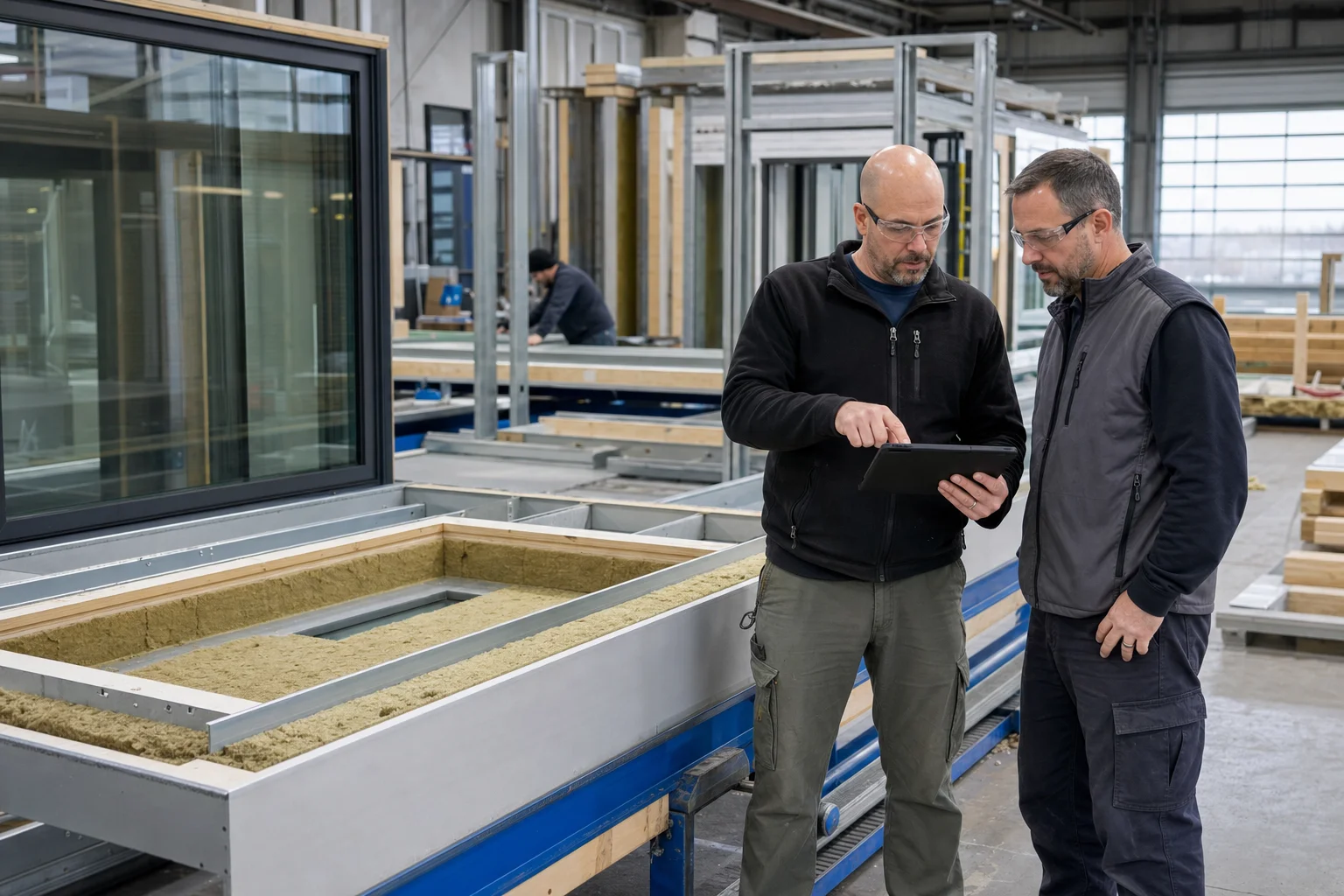
For a building materials or components manufacturer, monday.com can connect the quote, approved drawings, production dates and delivery schedule. The ERP or MRP remains the system of record; our monday.com implementation coordinates owners, schedules and exceptions across sales, the plant, warehouse and job site.
The drawings, quantities and requested date arrive together.
A specification changes while the order is moving. The revision, its approval and the affected work remain with the order.
If a shortage affects shipment, production, the warehouse and dispatch see the same blocker and the person responsible for resolving it.
We keep that thread intact, from quote request to truck.

Drawings, specifications, quantities, pricing and sales follow-ups attached to the same request.
Each order follows its schedule, components, priorities and current shop-floor status.
Materials, finished products and supplier orders visible before a shortage reaches the promised date.
Availability, lots, ready orders and material reserved for the right customer or project.
Dates, trucks, addresses, contacts and proof of delivery kept with the order.
Technical data sheets, material certificates, shop drawings and approvals available when needed.
Already running an ERP, an MRP, inventory software or Excel? They stay in place. We connect the coordination work around them in monday.com.
At the warehouse or the plant, the order owner can find the latest approved revision, promised date and blockers to resolve.
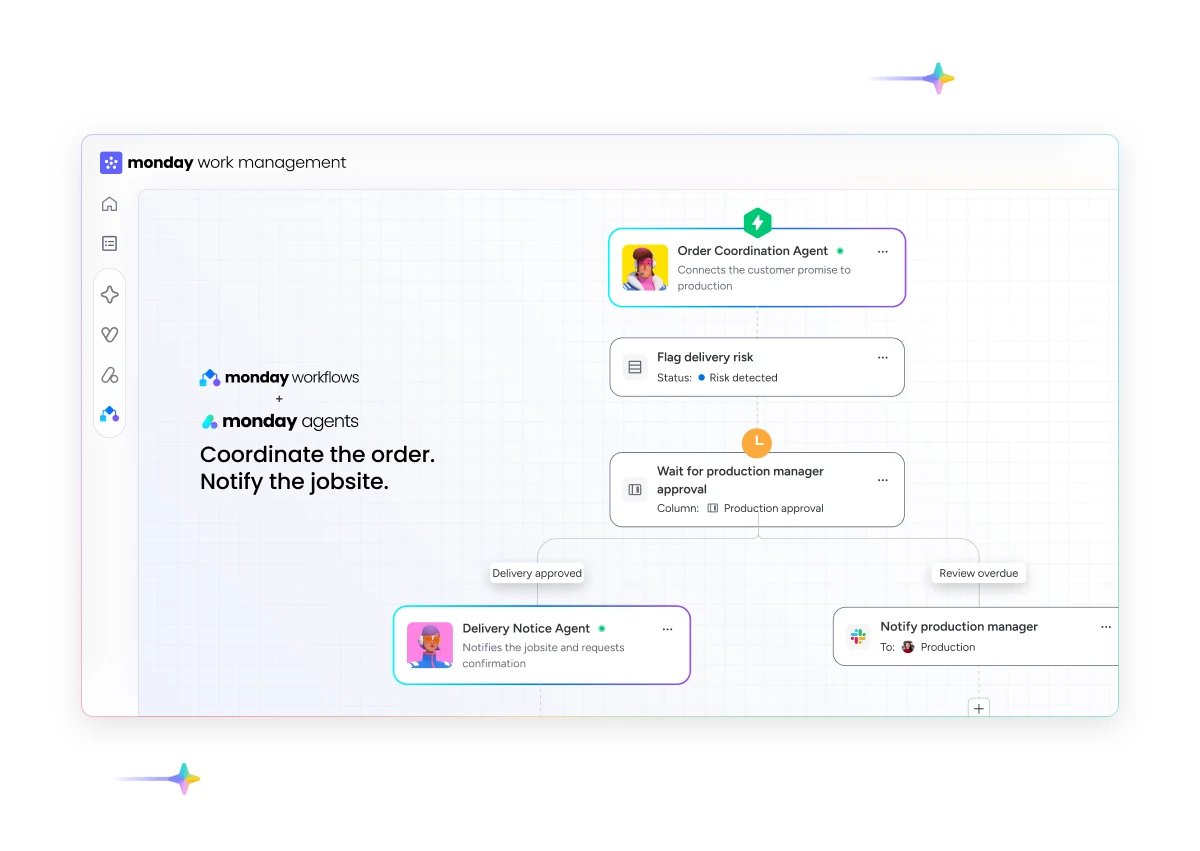
These roles illustrate tasks we can configure in monday.com. We define the information each agent can use, what it prepares and what your team approves.



Compiles the progress of every order, production delays, shortages and deliveries to prepare. Your team decides: priorities, schedule and jobsite commitments.
Matches every invoice to the right supplier, purchase and customer order, then prepares the approval request. Your team decides: pay, send back or adjust.
Technical data sheets, material certificates, shop drawings and approvals: it flags the missing piece before it blocks production or delivery. Your team validates what goes to the customer.
Gathers the drawings, specifications, quantities and pricing history to prepare the request. Your team decides: price, terms and submission.
We select the tasks worth delegating to agents. Pricing, production priorities and delivery commitments stay with your team.
We start with a defined workflow and the data it needs. The schedule follows the scope and your team’s availability.
We listen to sales, estimating, purchasing, production, warehouse and delivery. We follow one real order from quote to jobsite before configuring anything. What you get: an exact picture of where information gets lost.
We draw one process first, often the customer order, production or delivery preparation. Agent roles and limits are defined with you. What we hand you: a plan validated by your teams.
Deployment happens with your real orders and documents. Teams are trained in the office, plant and warehouse. What we hand you: a first useful process from the first phase.
Your internal owners learn to maintain the configured boards and automations. Support and next steps are agreed around your needs. What we hand you: a system your people know how to grow.
Your question is not here? You will talk to the person who would do the work in your business.
Discuss your operationsNo. Your tools stay in place. We connect the coordination work around them in monday.com. The transition happens in phases, one process at a time, using the information your teams need.
Yes, when monday.com coordinates quotes, customer orders, work orders, production, technical documents and delivery dates. The system is configured around your products and your commitments to construction projects.
Yes. For a supplier or distributor, the system connects quote requests, purchasing, inventory, order preparation, dispatch and jobsite delivery.
Yes. The quote, specifications, purchasing, production or order preparation, documents and delivery stay attached to the same order. Your team sees what is ready, what is blocked and what needs to ship.
Agents can prepare follow-ups, gather the documents attached to an order, flag a delay or identify missing information. Pricing, delivery commitments and operational decisions stay with your managers.
Last stop
Not ready to book? Write to us: a real person reads your message within one business day.
 certified partner