Keep the agreed billing method.
Each invoice retains its billing type. The office prepares instalments or expenses according to the contract terms.
Fixed-price, progress or time and materials: bill according to the contract. Direction par Horizon uses jobsite information to prepare payment requests, retain cumulative amounts and track what remains to be collected.
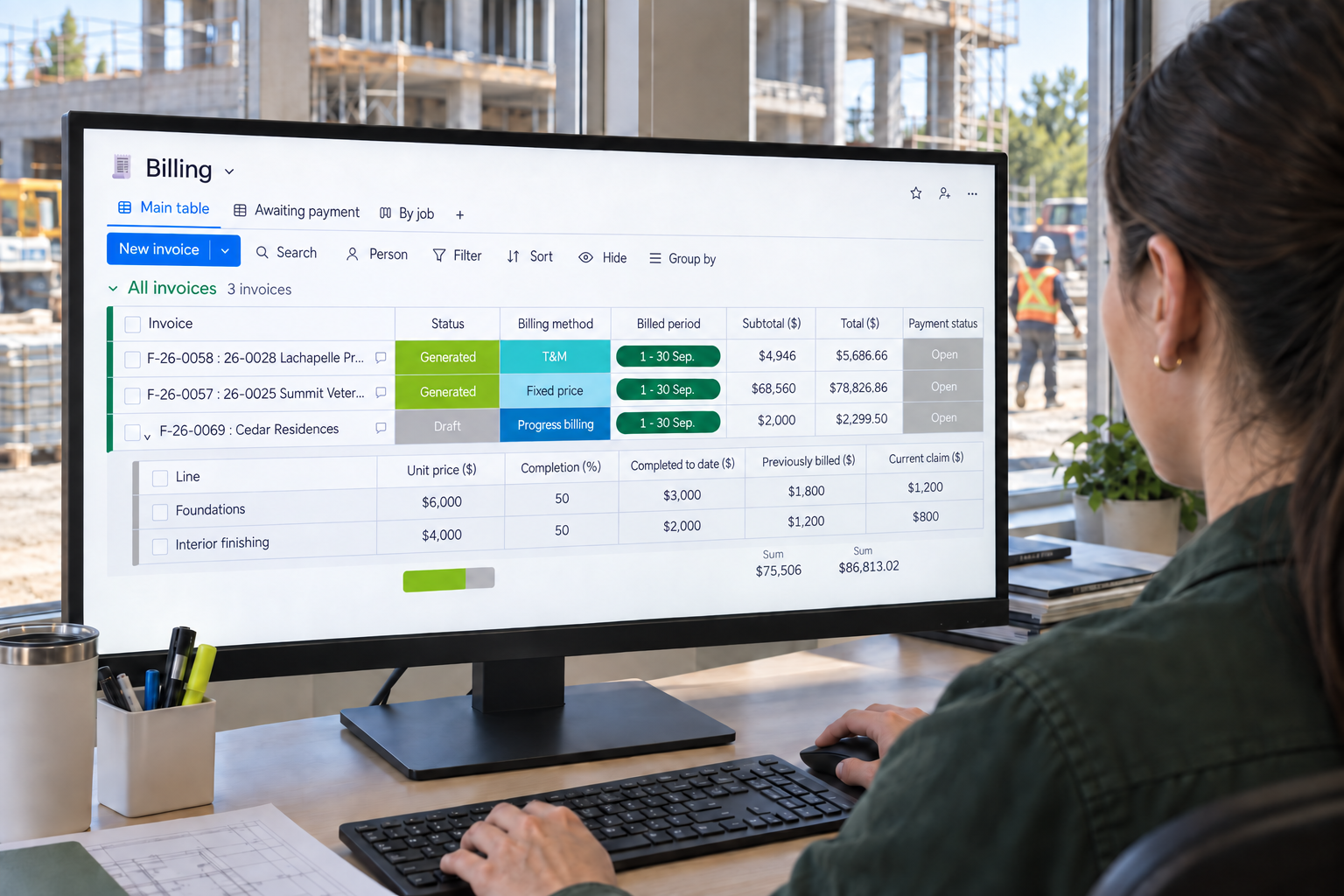
Fixed-price, progress or time and materials: keep the billing records together.
Each invoice retains its billing type. The office prepares instalments or expenses according to the contract terms.
With progress billing, amounts already requested remain on the payment application lines to prepare the next period.
The current request accounts for the previous cumulative amount. Your team checks the period's amounts before producing the invoice.
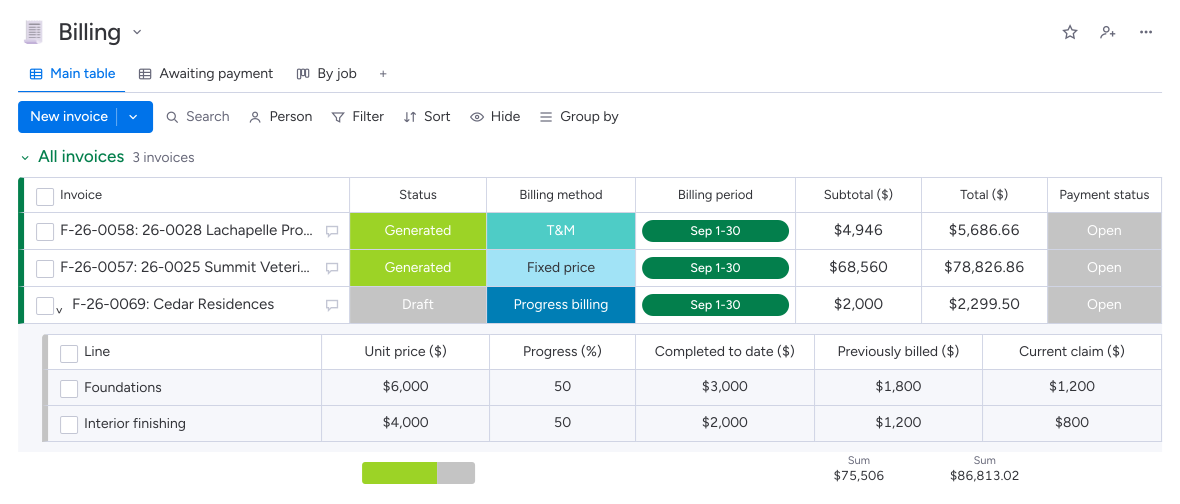
Fixed-price, progress and time and materials billing share the same records while retaining their calculations and sources.
Document status stays separate from payment status, so you can see which invoices to finish and which balances to collect.
Direction par Horizon manages fixed-price instalments, progress payment applications and time and materials billing. Invoices stay linked to the jobsite and client, with their period and terms. The team prepares amounts from the contract or approved data, then tracks document status and payment separately.
Approved hours, supplier invoices, material issues and material returns are linked to the invoice being prepared. Direction par Horizon uses this information to prepare detailed lines. Your administration team checks the items to bill and the document before authorizing it to be sent.
Direction par Horizon uses the contract items, their amounts and the cumulative amounts already requested. The project manager confirms progress, amounts and the contract's applicable holdback. Administration can find the previous cumulative amount to prepare the new payment request and review the document before sending it.
The records separate document status from payment status. Accounting enters payments received and tracks the balance due. The due date is calculated from the issue date and payment terms; invoices still open on their due date are flagged as overdue.